




Your legs are sore after a workout. There’s a foam roller on the floor and a massage gun in your hand.
Which one should you actually use?
Should you roll the whole muscle? Target the sore spot? Use both? And if you already own a vibrating foam roller, is a massage gun really doing anything different?
The answer depends less on which tool is “better” and more on what your body needs right now.
A massage gun vs vibrating foam roller comparison isn’t really about finding a winner. Both can support a recovery routine, but they offer very different experiences.
Here’s the easiest way to decide.
Massage Gun vs Foam Roller: What’s Actually Different?
The simplest difference?
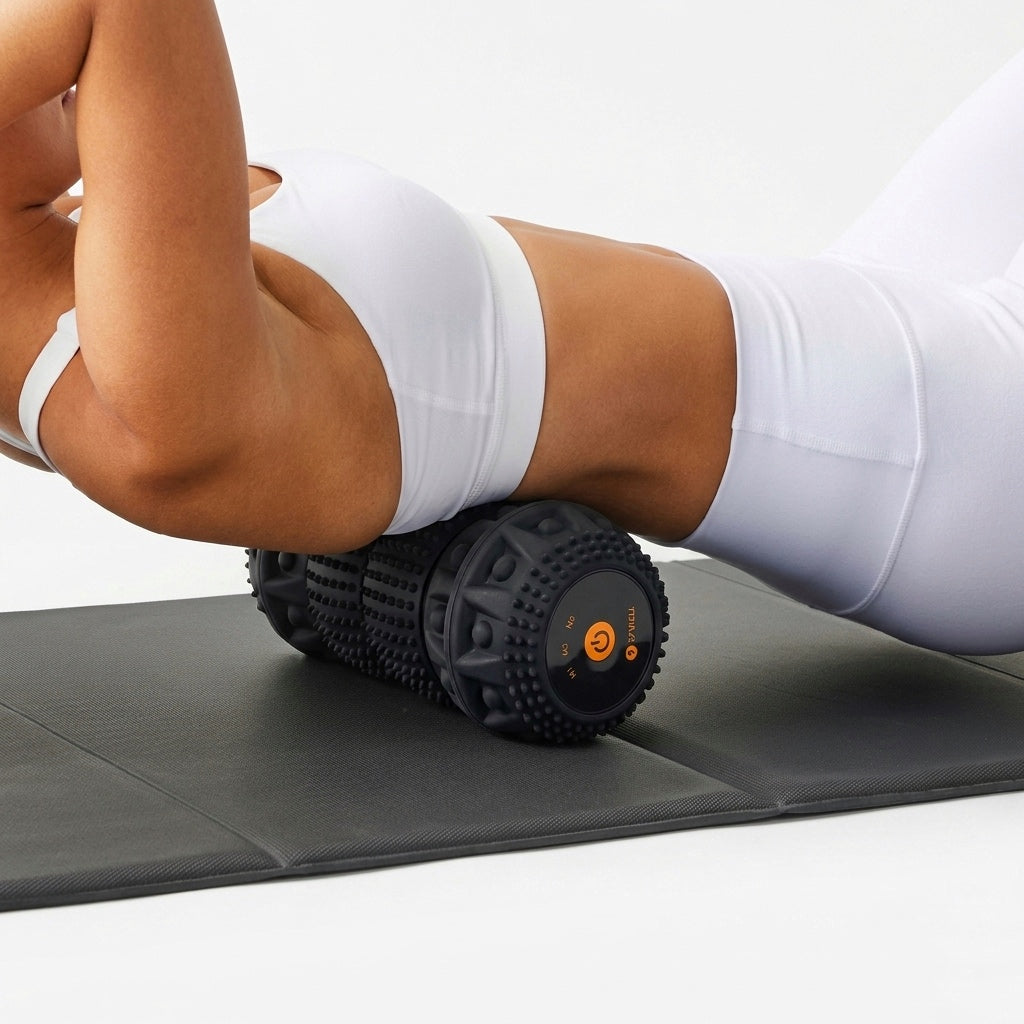
A foam roller brings your body to the tool. A massage gun brings the tool to your body.
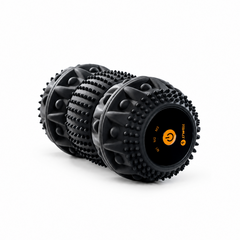
Vibrating foam roller uses your bodyweight and movement to apply pressure across larger muscle areas. A massage gun uses repeated percussion that you control by hand, making it easier to focus on a particular muscle area.
Here’s how that difference looks in practice:
| Massage Gun | Foam Roller | |
|---|---|---|
| Recovery Style | Targeted percussion | Broad Vibrating rolling |
| How You Use It | Move the tool over the muscle | Move your body over the tool |
| Best For | Specific muscle areas | Larger muscle groups |
| Control | Hand-controlled | Bodyweight-controlled |
| Common Areas | Calves, quads, shoulders, arms | Quads, hamstrings, glutes, calves |
| Routine Fit | Quick, targeted recovery sessions | Rolling and mobility routines |
So the real difference isn’t simply intensity. It’s how you want to interact with your recovery.
Does a Massage Gun Really Go “Deeper”?
It can feel more concentrated or intense because percussion is directed toward a smaller area.
But “deeper” doesn’t automatically mean “better.”
A vibrating foam roller uses bodyweight to create pressure while you move across the muscle, while a massage gun delivers repeated percussion wherever you position it.
Instead of asking Which one goes deeper? A more useful question is:
What kind of attention does this muscle need right now?
And that brings us to the part that matters most in real life.
Massage Gun or Vibrating roller ? Start With Your Recovery Scenario
Recovery doesn’t feel the same after every workout.
Sometimes your entire lower body feels worked. Other times, it’s one stubborn spot reminding you that yesterday’s workout definitely happened.
Rather than choosing by product, start with what your body is telling you:
| Your Recovery Scenario | Start With | Why |
|---|---|---|
| Leg day left your quads and hamstrings sore all over | Foam Roller | Rolling makes it easier to work across larger muscle groups. |
| One calf feels especially tight after a run | Massage Gun | Targeted percussion makes it easier to focus on a specific muscle area. |
| Your legs feel heavy after a long run or hike | Foam Roller | Broader rolling may fit better when several lower-body muscles feel worked. |
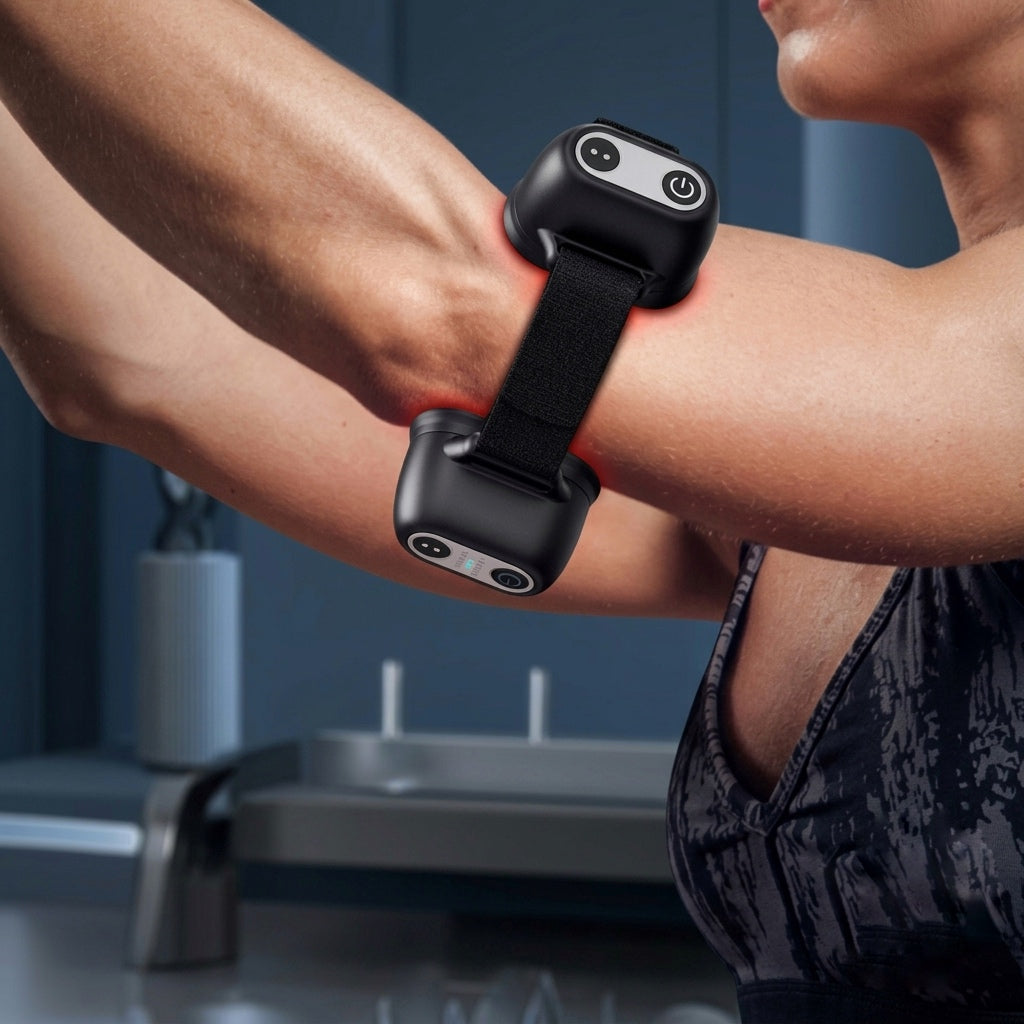
| Your shoulders and arms feel worked after upper-body training | Massage Gun | It’s easier to target specific upper-body muscle areas without getting on the floor. |
| You want a quick recovery session after the gym | Massage Gun | Pick it up, focus on the muscles you worked, and get on with your day. |
| Your whole lower body needs attention—but one area needs a little more | Foam Roller → Massage Gun | Start broad, then use percussion where you want more targeted recovery. |
This is why choosing a massage gun vs vibrating foam roller for sore muscles isn’t always an either-or decision.
Where you feel soreness—and how spread out it feels—can help you decide where to start.
Which Is Better After a Workout?
If you’re deciding between a massage gun vs vibrating foam roller after a workout, start with your recovery goal rather than looking for a universal winner.
If several large muscle groups feel worked, vibrating foam roller offers a practical way to move across those areas.
If one particular muscle is asking for attention, a massage gun gives you more control over exactly where you use it.
Research on percussion therapy and vibrating roller has explored outcomes such as muscle soreness, flexibility, and range of motion. But neither tool should be treated as a shortcut around the fundamentals of recovery.
Sleep, hydration, nutrition, appropriate movement, and rest still do the heavy lifting.
Think of recovery tools as supporting the routine—not replacing it.
Can a Massage Gun Do Everything a Foam Roller Does?
Not really—and that’s actually the point.
A massage gun and foam roller can overlap in their role in muscle recovery, but they don’t create the same experience.
A vibrating roller works particularly well when you want to move across a broader muscle area using your bodyweight.
A massage gun makes more sense when you want a quick, targeted session without turning your living-room floor into a recovery station.

“I Already Have a Foam Roller. Do I Really Need a Massage Gun?”
Maybe—but only if it solves a recovery problem your foam roller doesn’t.
If you often find yourself thinking:
“I wish I could focus on this exact area.”
or:
“I really don’t feel like getting on the floor right now.”
…then a massage gun may add something useful to your routine.
But if vibrating foam roller already does everything you want from your recovery routine, you don’t need another tool simply for the sake of owning one.
The goal is better recovery—not a bigger collection of recovery gear.
Wait… Can You Just Use Both?
Absolutely.
In fact, this is where the “vs” in massage gun vs foam roller becomes a little misleading.
The two tools can fit into the same post-workout recovery routine because they don’t necessarily have to do the same job.
For example, after a demanding run or lower-body workout:
1. Roll broadly.
Use a foam roller across larger areas such as your quads, hamstrings, and calves.
2. Get more targeted.
Use a massage gun on specific muscles that still feel like they need attention.
3. Let recovery continue.
Hydrate, eat well, move appropriately, rest, and get some sleep.
Simple.
You don’t need to turn recovery into another workout.
So… Massage Gun or Foam Roller?
Choose a foam roller if you prefer broader, movement-based recovery across larger muscle groups.
Choose a massage gun if you want quick, targeted, hand-controlled attention for specific muscle areas.
And consider using both if your routine benefits from broad rolling followed by more targeted percussion.
Some days your whole lower body feels worked. Other days, it’s just one stubborn spot asking for attention.
Your recovery doesn’t have to look exactly the same every day.
Choose what your body needs today.
At 17Well, that’s what Everyday Recovery is about: practical recovery tools that fit your body, your activity, and your life.
Recover in Your Rhythm.
Explore 17Well Vibrating Rollers →


댓글 남기기
이 사이트는 hCaptcha에 의해 보호되며, hCaptcha의 개인 정보 보호 정책 과 서비스 약관 이 적용됩니다.