




Red light therapy is showing up everywhere—from recovery studios to at-home wellness routines. You may have heard that it can help sore muscles, support recovery, or even improve exercise performance.
But does red light therapy for muscle recovery actually work, or are the claims getting ahead of the science?
The short answer: the research is promising, but it’s more nuanced than “red light makes muscles recover faster.”
Here’s what current research tells us—and what it may actually mean for your everyday recovery.
Does Red Light Therapy Actually Help Muscle Recovery?
Researchers often study red and near-infrared light under the term photobiomodulation (PBM or PBMT).Several systematic reviews and meta-analyses suggest PBM may support certain aspects of exercise recovery, particularly muscle soreness and recovery of muscle performance. However, results vary depending on how and when the light is used.
What the Research Found
| Research | What Researchers Found | What It Means in Plain English |
|---|---|---|
| 2025 systematic review & meta-analysis — 19 studies, 672 participants | Low-certainty evidence found that PBMT applied before exercise reduced muscle soreness. | Promising, not definitive. Red light may help reduce post-exercise soreness under certain conditions, but results won’t be identical for everyone. |
| 2024 meta-analysis — 34 randomized controlled trials | PBMT was associated with improved muscle endurance, recovery of muscle strength, and lower CK levels, although results differed among activity groups. | It may help worked muscles recover function. This does not mean red light builds muscle or makes you stronger by itself. |
| 2025 DOMS review — 14 studies | Some analyses found reduced soreness at 72–96 hours and improved muscle strength at 24–48 hours after exercise-induced DOMS. | It may help with some aspects of delayed soreness and recovery, but protocols and results still vary. |
So, does red light therapy help muscle recovery? The most accurate answer today is: it may help with certain parts of recovery, but the outcome depends on the protocol, the person, and what you mean by “recovery.”
How Might Red Light Help Tired or Sore Muscles?
Photobiomodulation, in Plain English
Here’s the part that matters most in everyday life.
When researchers study red light therapy for sore muscles, they’re usually interested in what happens when specific wavelengths of red or near-infrared light are applied directly to the muscles being studied.
This is called photobiomodulation (PBM).
Rather than simply warming the skin, PBM is being studied for how light interacts with biological processes inside tissue. Researchers have looked at whether this may influence muscle fatigue, cellular energy-related processes, exercise-induced muscle stress, soreness, and how quickly muscle performance returns after exercise.
So what might you actually notice?
After a hard workout, your muscles may feel sore, heavy, fatigued, or slower to regain their usual performance. Current research suggests PBM may help with some of these recovery outcomes under certain protocols—particularly muscle soreness and recovery of muscle function.
It’s not the same as instantly “relaxing” a tight muscle, and it shouldn’t be treated as a cure for an injury.
Think of it more simply:
You work a muscle → the muscle becomes fatigued or sore → targeted red or near-infrared light may support some of the processes involved as that muscle recovers.
Which Areas Can You Use Red Light On?
For muscle recovery, it makes more sense to think about the muscle group you’ve actually worked rather than treating red light as a general whole-body solution.
For example:
- Thighs and calves after running, cycling, hiking, or leg training
- Hamstrings and quads after lower-body workouts
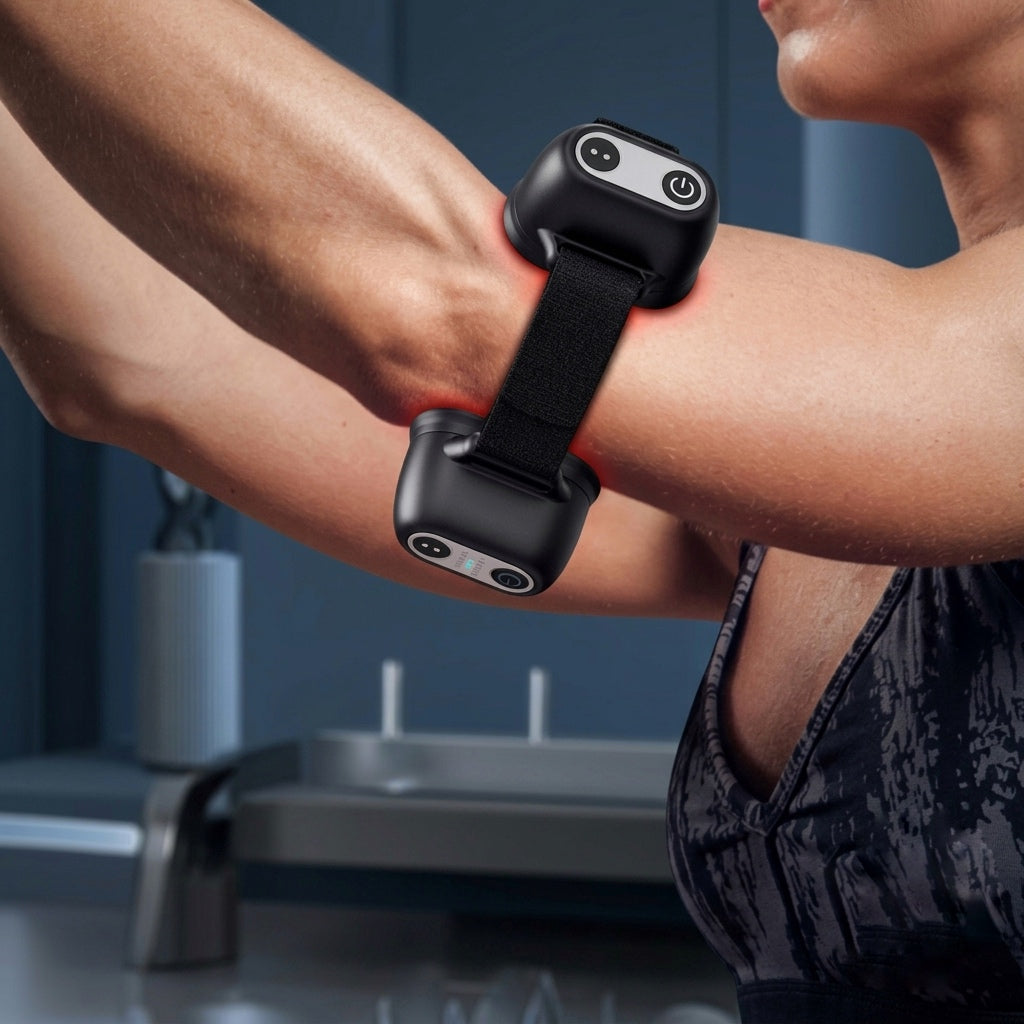
- Shoulder-area muscles and upper arms after upper-body training
- Back muscles after lifting or a physically demanding day
The key idea is targeted recovery: apply light to the muscle area you want to focus on.
That distinction matters because much of the exercise-recovery literature has investigated localized PBM applied to specific muscle areas. Evidence for whole-body PBM is much more limited; a 2025 systematic review of five studies involving 105 physically active participants found no clear benefit for exercise performance or fatigue biomarkers.
And if pain is sharp, persistent, unexplained, or related to an injury rather than ordinary post-exercise soreness, a recovery device shouldn’t replace appropriate medical evaluation.

Red Light Therapy Isn’t the Same as Heat Therapy
Although both can be part of a recovery routine, they work differently.
Heat therapy primarily works by warming tissue. Photobiomodulation does not rely primarily on heat. Researchers instead study how specific wavelengths of red and near-infrared light interact with biological tissue. PBMT is commonly described in the scientific literature as a non-thermal light-based intervention.
So if your goal is warmth and temporary muscle comfort, heat therapy and red light therapy shouldn’t automatically be treated as interchangeable tools.
Want to understand the difference? Read: Red Light Therapy vs. Heat Therapy: What’s the Difference for Muscle Recovery?
What Does This Mean for Your Post-Workout Recovery?
Imagine finishing a long run, leg day, pickleball session, or weekend hike. Your muscles feel worked—not injured, just tired.
This is where red light therapy after a workout may fit into a broader recovery routine.
It shouldn’t replace the fundamentals: sleep, hydration, nutrition, appropriate movement, and rest still matter. Instead, think of red light as another recovery tool you can build around those basics.
Recovery rarely comes from one device or one session. It comes from creating a routine your body—and your schedule—can actually maintain.
Why Targeted Red Light Fits Everyday Recovery
Focus Recovery Where You Need It
Your whole body doesn’t always need the same recovery.
After running, your legs may need more attention. After strength training, it might be your shoulders, arms, or back.
That’s where a targeted approach becomes practical: focus your recovery routine on the areas you’ve actually worked.
At 17Well, that’s how we think about light-based recovery—not as a magic fix, but as a practical tool designed to fit into real life.
Recovery Works Better When It Fits Your Life
Recovery shouldn’t feel like another complicated task on your schedule.
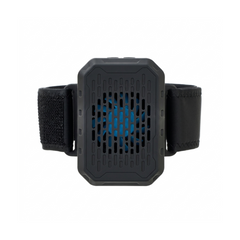
A wearable or targeted red light therapy device can make it easier to build a session into your time at home—whether that’s around training, after a long day, or when worked muscles need some extra attention.
That’s the idea behind 17well Everyday Recovery: giving your body practical ways to recover without putting life on hold.
Recover in Your Rhythm.
What the Research Still Doesn’t Know
There’s an important catch: “red light therapy” isn’t one standardized protocol.
Studies use different wavelengths, doses, treatment durations, timing, devices, application areas, and participant groups. Even recent meta-analyses conclude that the evidence is not yet sufficient to establish one optimal PBM protocol.
That means there is currently no single red light routine proven to be best for everyone.
And that’s why responsible recovery advice should leave room for what science still hasn’t answered.
Is Red Light Therapy Worth Adding to Your Recovery Routine?
If you’re expecting red light therapy to replace sleep, nutrition, movement, or proper rest, the research doesn’t support that idea.
But if your legs feel worked after a run, your quads are sore after leg day, or your upper-body muscles are recovering from training, targeted red light therapy may be one additional tool worth considering as part of your recovery routine.
Current evidence is encouraging—especially around muscle soreness and recovery of muscle function—but it’s not a magic switch.
The goal isn’t to find one perfect recovery tool.
It’s to build a routine that works for your body, your activity, and your life.
Explore 17Well Red Light Therapy →
17Well Red Light Therapy Q&A
Does red light therapy really help with muscle recovery?
Research suggests that red light therapy may support certain aspects of muscle recovery, including post-exercise soreness and recovery of muscle function. However, results vary depending on wavelength, dose, timing, treatment area, and individual response. It’s best viewed as a supportive recovery tool rather than a replacement for rest, sleep, hydration, or nutrition.
What body areas can you use red light therapy on for muscle recovery?
For recovery, red light therapy can be targeted toward muscle groups that have been worked, such as the quads and calves after running, hamstrings after lower-body training, or shoulder-area, arm, and back muscles after upper-body exercise. The goal is targeted recovery rather than assuming every part of the body needs the same treatment.
Is red light therapy better before or after a workout?
There isn’t one universally proven best time. Research has investigated red light therapy before and after exercise, and outcomes can depend on the treatment protocol and recovery goal. Some research on muscle soreness has found benefits from pre-exercise PBM, while other studies examine post-exercise recovery. Rather than assuming one timing works for everyone, follow the guidance for your device and recovery routine.


コメントを書く
このサイトはhCaptchaによって保護されており、hCaptchaプライバシーポリシーおよび利用規約が適用されます。