


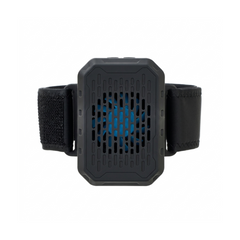


Sometimes. A mini massage gun for runners can make sense when someone already likes brief percussion on healthy muscle and wants a device that is easy to keep nearby. It makes less sense when the purchase is supposed to explain unfamiliar pain, rescue a badly timed workout, or guarantee faster recovery.
That answer is not as exciting as a list of “runner-approved” features. It is more useful, because the same device can be optional after one run, inappropriate after another, and convenient during travel. The runner’s situation changes the decision before the speed setting does.
The three people below are fictional composites, not customers or testimonials. Their situations show why there is no universal answer for every runner.
The Short Answer
A mini massage gun is not a distinct category of recovery science for runners. It is a smaller way to deliver percussion. Going mini changes where the device can be stored, how easily it can be packed, and how it feels in the hand. It does not change what an unusual symptom means, and it does not turn a comfort routine into an injury assessment.
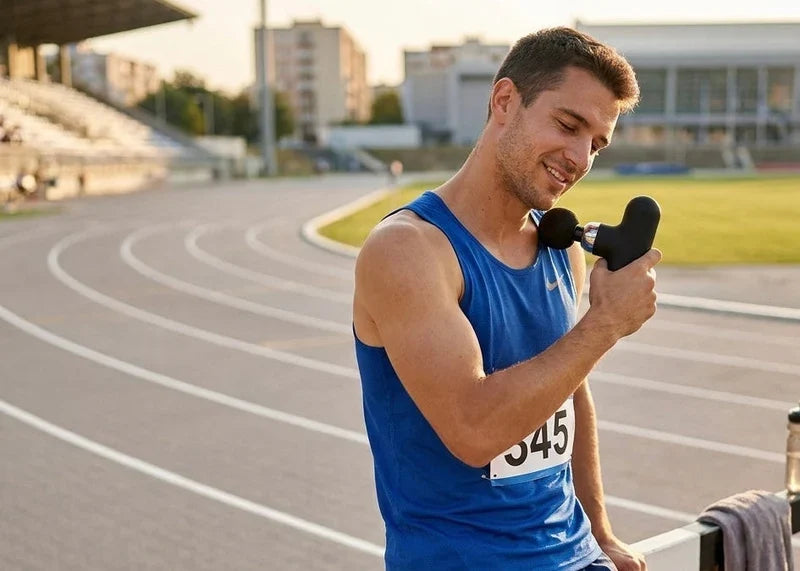
The strongest case for the format is simple access. A runner who already uses percussion comfortably may prefer a device that can stay in a drawer near running gear or fit into a small bag. Less setup can make an optional routine easier to repeat.
The weakest case is buying one because running culture makes recovery equipment feel mandatory. Training still depends on decisions about workload, sleep, food, hydration, and appropriate responses to pain or illness. A powered tool may sit beside those decisions; it cannot make them.
Three Runners, Three Different Decisions
Maya After an Easy Five Miles
Maya finishes a familiar neighborhood route at a familiar effort. Her calves feel worked, but there is no sharp pain, swelling, bruising, numbness, or change in how she walks. She has used gentle percussion before and knows that she prefers it as a short comfort ritual after changing out of her running shoes.
For Maya, a mini device is plausible because there is little uncertainty about the situation. She is not trying to make the run “count less” or prove that she can train hard again tomorrow. The device is simply nearby, the muscular area is easy for her to reach, and a mild setting feels comfortable without extra pressure.
Her answer is yes, optionally. She could also skip the device with no sense that recovery has failed. If she wants to compare pre-run and post-run use without turning this article into a timing manual, 17Well’s guide to using a massage gun before or after a workout provides the deeper context.
Eli After a Demanding Long Run
Eli’s situation looks different before the massage gun even leaves the shelf. Late in a long run, he develops a new, one-sided pain. By the time he reaches home, he is favoring that side as he walks. The sensation is not his normal, familiar post-run tightness.
Eli does not test several attachments to see which one makes the area feel different. He does not use percussion to decide whether the problem is serious, because a temporary change in sensation would not explain what happened. The device stays off while he reconsiders the next training decision and seeks appropriate guidance if the symptom persists, worsens, or otherwise concerns him.
His answer is no in this situation. That is not a verdict on all massage-gun use. It is recognition that new pain plus altered movement is a different question from optional comfort on healthy muscle.
Jordan at a Destination Race
Jordan has used a compact massage gun during ordinary training for months. A destination race is approaching, and luggage space is limited. The device is familiar, but the travel setting introduces small sources of friction: charging, choosing an attachment, storing the unit, and deciding whether it is worth carrying alongside shoes and race-day essentials.
Here, compactness has real value. Jordan is more likely to fit a small device into the trip than a bulky one. Race week is not the time to turn a familiar optional routine into a longer or more intense experiment. The useful version of the plan looks much like training at home. The device remains optional, the setting remains familiar, and any concerning symptom still overrides the packing decision.
Jordan’s answer is maybe, based on space and habit. Portability resolves a luggage problem. It does not create a new recovery need.
Together, the three scenes show why “Is a massage gun good for runners?” is too broad. Maya is considering familiar comfort. Eli is responding to a changed physical signal. Jordan is managing travel friction. A product specification cannot collapse those situations into one recommendation.
What Going Mini Actually Changes
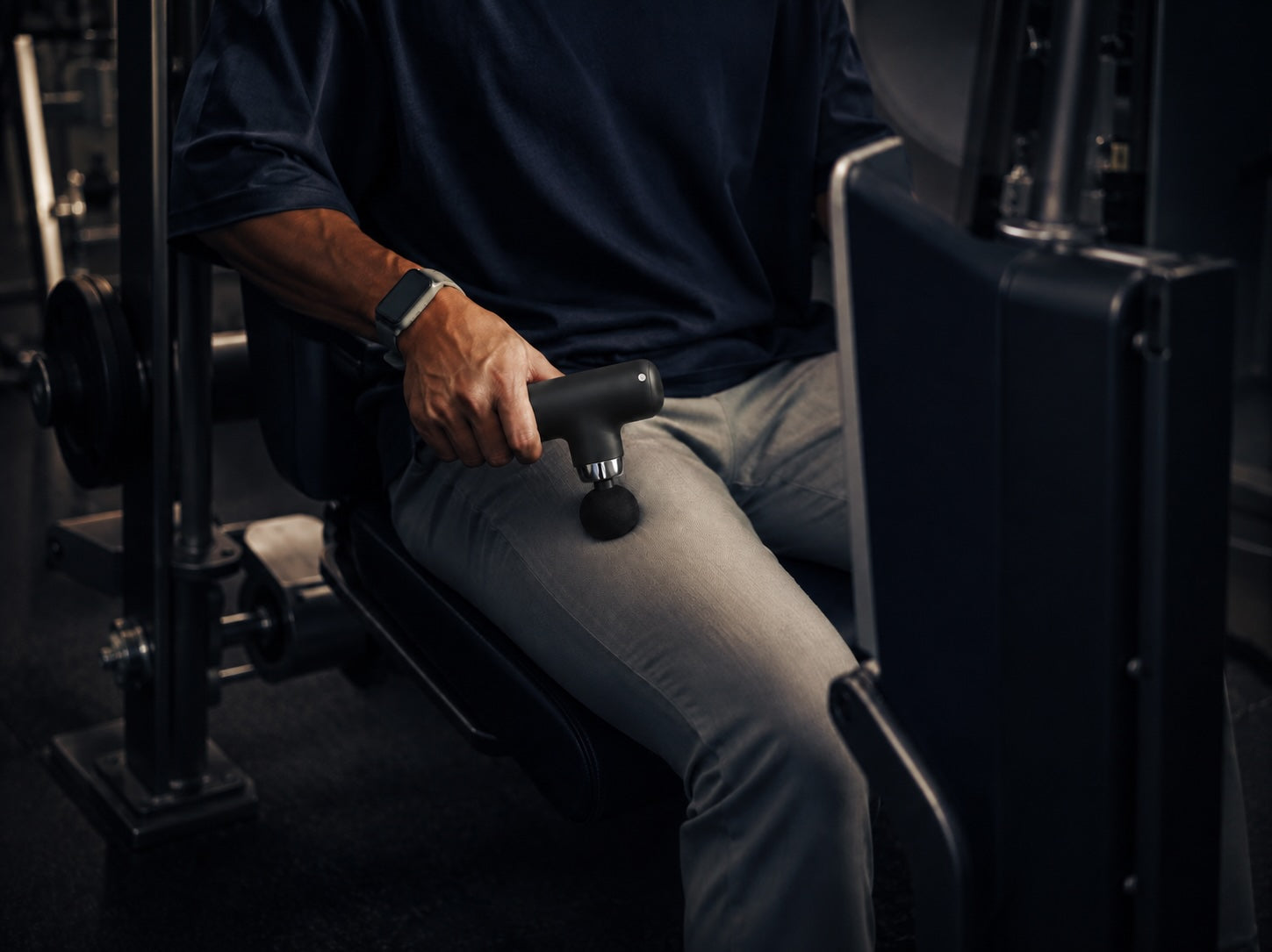
The most meaningful difference may be where the device lives. Equipment stored in another room, buried in a closet, or left uncharged tends to disappear from a routine. A compact, rechargeable device can remain closer to the place where a runner changes shoes or packs a gym bag. For someone who already values percussion, that availability may matter more than a dramatic maximum-speed number.
Smaller is not automatically easier, though. A short handle may be convenient for a calf and awkward for the back of a thigh. Reaching the glutes can force the wrist into an uncomfortable position. A light housing can still transmit enough vibration through the grip to make control unpleasant. Even a portable massage gun for runners becomes inconvenient if its lowest setting feels too strong or if the intended muscle is difficult to reach without pressing hard.
Travel adds its own arithmetic. The main unit is only part of what gets packed; attachments, a charging cable, and storage still occupy attention and space. The practical advantage appears when the complete setup is smaller than what the runner would otherwise bring and familiar enough to use without improvisation. The dedicated mini massage gun travel guide covers packing and carry-on considerations in more detail.
Mini, then, is a format decision. It can reduce storage and transport friction. A shorter handle may also reduce reach or require more wrist flexion. Neither result says anything by itself about running performance.
When Recovery Gear Becomes a Distraction
Recovery equipment becomes distracting when a change in sensation is treated as proof of a change in recovery. A runner may feel looser after using percussion. That experience can be personally meaningful without demonstrating that muscle repair happened faster, tomorrow’s workout is safer, or race performance will improve.
The research supports keeping those ideas separate. A systematic review of massage-gun studies included 11 studies, with ten rated at moderate risk of bias and one at high risk. It reported possible short-term flexibility or range-of-motion effects in some settings. Strength, balance, acceleration, agility, and explosive-performance outcomes did not consistently improve and sometimes decreased. The application protocols also varied, so the review did not establish one runner-specific method (read the systematic review).
This does not make every personal comfort routine meaningless. It means the routine should not be promoted into a bigger claim than the evidence can carry. Maya can like how a brief session feels without calling it faster recovery. Jordan can value convenience without assuming that packing the device improves race readiness. Eli should not let a temporary sensation overrule a changed stride.
A device can be useful and still be optional. Keeping that distinction visible prevents recovery gear from becoming a substitute for training judgment.
Put It Down When the Signal Changes
The dividing line is not “runner” versus “non-runner.” It is familiar, healthy-muscle use versus a situation that deserves a different response.
Hospital for Special Surgery advises against using a massage gun where there is significant pain or swelling. It also says to avoid direct use on bones, nerves, and joints and to stop if use causes pain, discomfort, redness, or irritation (read the HSS guidance). Those are general safety boundaries, not a way to diagnose a running injury.
For runners, bony landmarks and sensitive structures are easy to encounter around the lower leg and ankle. Do not aim percussion directly at the shin bone, kneecap, ankle bones, Achilles tendon, or a painful joint. Avoid bruised, swollen, injured, irritated, or unusually sensitive areas. If a symptom is new, one-sided, worsening, persistent, or changing how you move, set the device aside and consider appropriate professional guidance.
That is why Eli’s massage gun stays off. The decision is based on the signal, not on whether a low setting is available. When ordinary healthy-muscle use is appropriate, current model instructions still control attachment choice and operation; this massage gun technique guide is a general starting point, not an injury-treatment protocol.
A Compact Setup in Practice
The current 17Well Mini Massage Gun offers one concrete example of what a compact setup can include. Its official product information lists four speed levels, four interchangeable heads, USB-rechargeable operation, and a manufacturer-listed maximum of up to 4,000 impacts per minute. The same page advertises an operating range of 25–45 dB and an approximately 1.5-second long press for power control.
Those specifications answer practical questions. Multiple levels give the user more than one intensity option. USB charging affects where the device can be powered. The listed noise range may matter in a shared home or hotel. Four heads create different contact options, although more attachments do not automatically make a routine better.
The figures do not answer the most personal questions. They cannot tell Maya whether the lowest setting feels comfortable, Jordan whether the complete kit deserves luggage space, or Eli what caused his pain. They also do not demonstrate faster recovery, injury prevention, or improved running performance. Current first-party specifications should remain product information, not outcome evidence.
Runners who reach a yes or maybe decision can review the latest 17Well Mini Massage Gun specifications and instructions. Anyone who reaches no does not need to be persuaded by a larger number or another attachment.
The Verdict
Yes, a mini massage gun may suit runners who already know they enjoy gentle percussion on healthy muscle, can comfortably reach the intended area, and value a device that is easier to store or pack. In that case, compactness removes friction from an existing preference.
No, it is not a sensible answer to unexplained pain, swelling, bruising, irritation, numbness, a painful joint, or a change in stride. It also should not be bought as proof that recovery will happen faster or that the next hard run can remain unchanged.
Maybe is the honest answer for everyone between those positions. A first-time buyer may need to decide whether any percussion routine is appealing before paying extra attention to size. A frequent traveler may value portability. The charger and attachments may still feel like extra packing. A runner who already owns a device may discover that a second, smaller one adds little.
The right conclusion does not depend on being serious enough about running. It depends on whether the format supports a familiar, conservative comfort routine without obscuring a more important signal. For some runners, that earns a mini massage gun a place near the shoes. For others, leaving that space empty is the better decision.

댓글 남기기
이 사이트는 hCaptcha에 의해 보호되며, hCaptcha의 개인 정보 보호 정책 과 서비스 약관 이 적용됩니다.