



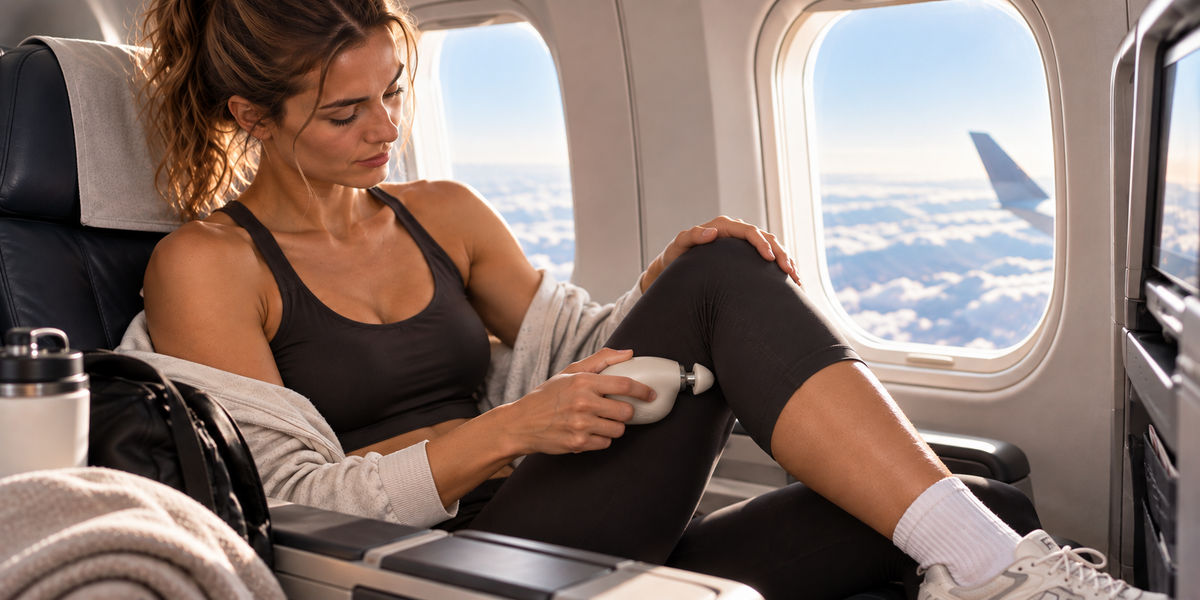
Long flights, cramped seats, heavy bags, and unfamiliar beds all add up to stiff, achy muscles by the time you reach your destination. A compact massage gun can be a convenient addition to your travel routine, provided it fits your luggage and meets the relevant battery requirements.
If you're looking for the best mini massage gun for travel, look for a lightweight model that's easy to pack, comfortable to handle, and compatible with your charging setup.
Below is what to look for, the carry-on rules to know, and how to pack it.
Why Choose a Mini Massage Gun for Travel?
Full-size massage guns can offer useful features, but their larger dimensions may take up more space in your luggage.A mini massage gun offers a more compact way to carry a percussion massage device.
For travel, that smaller size can be particularly useful when you're working with limited carry-on space or a small backpack. Just remember that dimensions and weight vary by model.
Just as important, a compact design may make the device easier to unpack and use when you need it.
Recovery tools are more convenient when they fit your routine, whether you're relaxing after a long flight, in the hotel room, or between meetings on a work trip.
What to look for in the best travel massage gun
Not every mini massage gun is equally travel-friendly. These are the features that matter most when you're on the move.
- Compact size and low weight. Check the actual dimensions and weight, including the carrying case. A smaller device can save space, but it should still feel comfortable to hold.
- Quiet operation. A quieter model may be more suitable for hotels or shared accommodation. Look for clear noise specifications and, if available, an actual-use demonstration.
- Good battery life and USB charging. Check the stated runtime, charging port, cable requirements, and battery capacity. Some models support USB charging, but not all use the same connector or power requirements.
- Simple controls and a few speeds. You don't need a dozen settings on the road. A handful of reliable speeds may be enough for your routine.
- A couple of attachment heads. Pack only the attachments you expect to use, following the manufacturer's instructions.
-
Durable build and a small case. A protective pouch or case keeps the device and its attachments protected in your luggage.
Which Massage Devices Fit Easily in Carry-On Luggage?
If you're trying to pack light, mini massage guns and other compact handheld massagers may be easier to fit into carry-on luggage than larger recovery devices.
But “compact” doesn't guarantee that a device will fit every bag. Check the massage gun's dimensions, its carrying case, and your airline's cabin baggage allowance.
A small device with several bulky attachments can take up more space than you expect. Consider packing only what you'll actually use during your trip.
It's also worth remembering that fitting inside a carry-on bag and meeting airline battery rules are two separate requirements.

Can you bring a massage gun on a plane?
In most cases, yes. According to the TSA, massagers are generally allowed in both carry-on and checked bags. However, rechargeable massage guns may contain lithium-ion batteries, so it's important to check the battery type and capacity before flying. For devices with built-in lithium batteries, carry-on baggage is generally recommended. Certain devices may also be allowed in checked baggage if they meet applicable restrictions and are fully switched off and protected from damage or accidental activation.
Built-In Batteries vs. Spare Lithium Batteries
The distinction is important: a battery installed inside a device is not treated the same way as a spare battery.
Spare lithium batteries and power banks must be packed in carry-on baggage, not checked luggage. Battery capacity limits also apply, and larger batteries may require airline approval.
What to Check Before You Fly
- Check the battery capacity. Look for the watt-hour (Wh) rating on your device or in its specifications, and confirm that it meets applicable airline restrictions.
- Expect a possible second look. The device may be selected for additional inspection during airport screening.
- Keep spare lithium batteries and power banks in the cabin. Protect them against damage and short circuits.
- Check airline and destination rules. International requirements and airline policies may differ from U.S. rules.
Rules can vary by airline and country and can change over time, refer to the TSA guidance on massagers and the FAA's battery guidance. Security officers make the final screening decision.
How to pack a travel massage gun
Packing a mini massage gun is simple, but a little care keeps it safe and ready:
- Check the battery level before departure and pack the correct charging cable.
- Use the case or a padded pocket so the attachment heads and body don't get knocked around.
- Turn it fully off (not just idle) so it can't switch on and drain in your bag.
- Stow the charging cable with it in the same pouch so you never leave it behind.
- Keep the device accessible for security screening in case an officer needs to inspect it.
-
If your carry-on bag is checked at the gate, remove any spare lithium batteries or power banks and keep them with you in the cabin.
Using Your Massage Gun After a Long Travel Day
After arriving at your destination, gentle percussion massage may feel soothing on muscles that are tired from travel. If appropriate for you, try a brief, light session on healthy muscle areas such as your quads or hamstrings, following the device's instructions.
Avoid the neck, spine, joints, injured areas, and spots that are swollen or unusually painful. Never use a massage gun to push through numbness, sharp pain, or unexplained discomfort.
Keep sessions short and the pressure light, just as you would at home. For the full method, including how long to spend on each area and where not to use it, see our guide on how to use a massage gun.
A compact option to travel with
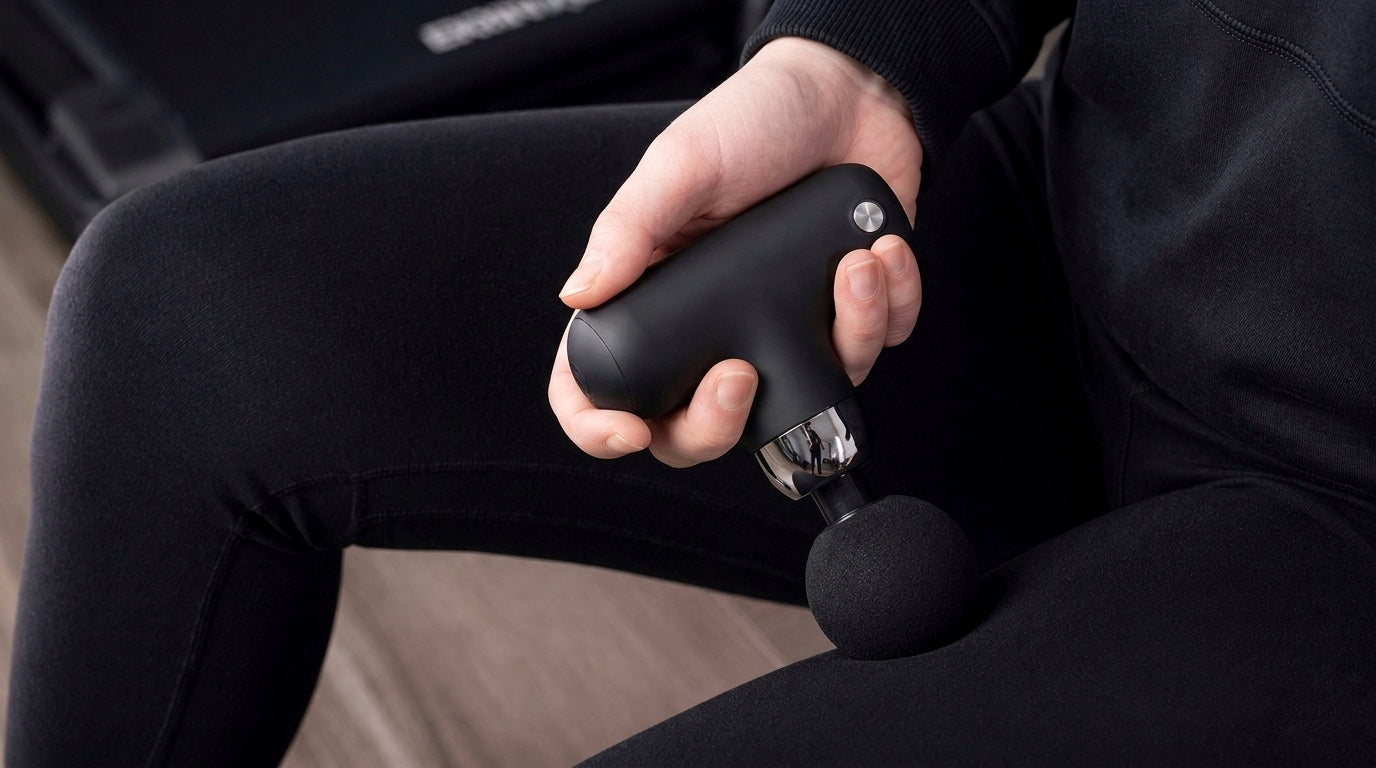
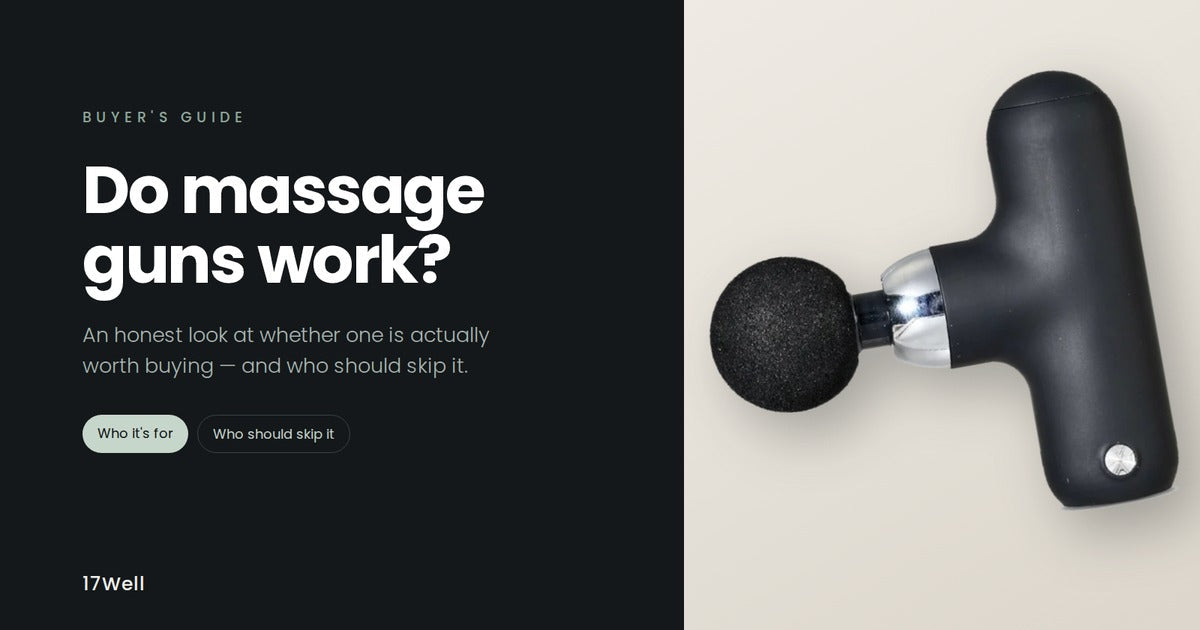
If you want a mini massage gun that prioritizes portability, the 17Well Mini Massage Gun is one compact option to consider. Before packing it, check the product's published dimensions, weight, battery capacity, and charging requirements to see whether it fits your travel plans.
A practical travel-friendly massage gun should fit both your luggage and your everyday routine—not just look small in product photos.
The bottom line
The best mini massage gun for travel is the one you'll actually pack and use: small, light, comfortable to handle, and compatible with your charging setup. Check your airline's battery requirements, protect the device during transit, and follow its instructions if you choose to use it after arriving. It's one of the easiest ways to arrive feeling less stiff and more like yourself.
Want to plan the rest of your recovery routine? Learn the technique in our guide on how to use a massage gun, or see how a massage gun compares with other tools in foam roller vs massage gun.
Sources: TSA: Massagers, TSA: Batteries

Leave a comment
This site is protected by hCaptcha and the hCaptcha Privacy Policy and Terms of Service apply.