




If you have ever finished a hot shower with thirty seconds of cold water, you have already tried a rough version of contrast therapy. The idea is old and the practice is simple: you move back and forth between something warm and something cool on the same part of your body, a few rounds in a row.
It used to live in locker rooms and spas. Now it shows up in ordinary homes, mostly because the equipment got smaller and cheaper. Here is what it actually involves — how people commonly do it, where it fits, and what to watch out for.
What contrast therapy actually is
Contrast therapy means alternating warm and cool on the same area, within a single session. Warm for a few minutes, cool for a shorter stretch, then back to warm — usually repeated a handful of times.
The key word is alternating. Using heat on Monday and cold on Thursday is not contrast therapy, and neither is a long soak in a warm bath. The whole point is the back-and-forth inside one sitting.
There are two broad versions. The whole-body version is the one you see online: a sauna, then a cold plunge, then back to the sauna. It needs space, water and setup. The local version is far more common — you apply warm and cool to one specific area, like a knee, a shoulder, a lower back or a set of calves, using packs, wraps or a device that sits against the skin.
For most people reading this, the local version is the practical one. It takes fifteen or twenty minutes, you can do it on the sofa, and it targets the part of you that actually feels worked.
Descriptions of how it feels are fairly consistent: the warm phase feels loosening, the cool phase feels sharper and more settling, and the switch between the two is the part users tend to remark on.
How people typically alternate hot and cold
There is no single correct formula, but most home routines land in a similar range.
The common ratio is more warm than cool. A typical pattern is three to four minutes warm, then about one minute cool. Some people run it closer to even, but the longer-warm, shorter-cool split is what you will see most often — the cool phase is less comfortable and does not need as long to register.
Most sessions run three to five rounds. With a 3:1 split, that puts a session between twelve and twenty-five minutes. Longer is not automatically better — past that point most people report the routine starts feeling like a chore, and a chore does not survive the month.
Temperature should be comfortable, not extreme. Warm means pleasantly warm, the temperature of a hot bath, not something you flinch away from. Cool means cool enough to notice, not so cold that you tense up and hold your breath. Nothing about contrast therapy requires suffering, and the extreme version is not a more advanced version.
Whether you end warm or cool is a preference, not a rule. People who use it in the evening often finish warm because it leaves them calmer. People who use it midday often finish cool because it leaves them feeling more alert.
If you want a starting point: four minutes warm, one minute cool, four rounds, finishing warm. Adjust from there based on how it actually feels rather than what a chart says.
When people use it
Three moments come up again and again.
After training. The most common one. Many people use contrast therapy in the hour or two after a session, particularly after legs, after a long run, or after anything that leaves an area feeling tight and heavy. It is a way of doing something deliberate at the end instead of going straight from the last set to the couch.
After a long day on your feet. Nurses, teachers, hospitality staff, tradespeople — anyone doing a full day of standing or walking. Here the interest is usually in the feet, calves and lower back, and it tends to happen in the evening as part of winding down.
On rest days. Rest days are when people are most likely to skip any routine, because there is no session to attach it to. Some people deliberately schedule contrast therapy on rest days for that reason — it gives the day a small anchor, and it is low effort enough that you will actually do it while watching something.
There is also a fourth use: no particular reason at all. Plenty of people find the routine pleasant and do it while reading or at the end of the workday, and it may help you feel more comfortable in a general, everyday sense without being tied to a workout.
Hot vs cold on their own — how contrast is different
Heat and cold each have their own place, and it is worth understanding them separately before you understand the combination.
Heat on its own is the comfortable one. People commonly use it before stretching, on stiff areas in the morning, or at the end of a long day. The experience is passive and pleasant — you put it on, it stays warm, you forget about it for twenty minutes. Its weakness is exactly that: it fades into the background, and many people fall asleep with it on.
Cold on its own is the sharp one. It is commonly used right after hard efforts, and the sensation is unmistakable. Its weakness is tolerance — cold is uncomfortable, most people cut the session short, and very few build a lasting habit around it.
Contrast sits between the two, and the difference is not simply that you get both. Because you keep switching, the session holds your attention instead of drifting into background noise — it has structure, rounds, a rhythm. You also get the tolerable version of cold: one minute of cool between two comfortable warm phases is a much easier ask than ten straight minutes, which is why people who bounce off cold on its own often stick with contrast. And it gives you one routine rather than two competing ones, so you are not deciding each day whether this is a heat day or a cold day.
To be straight about it: the research comparing alternating hot and cold against either on its own is mixed, and nobody should tell you the science is settled. The practical case is that contrast is the version many people find comfortable enough to keep doing.
Common mistakes and what to avoid
Going too extreme. The most common error by a distance. Scalding hot and shocking cold do not make the session more effective, they just make it something you dread.
Skipping the barrier. Never put anything very hot or straight-from-the-freezer directly against bare skin. Use a thin layer of fabric, and watch the clock rather than trusting how it feels — skin adapts to temperature and stops giving accurate feedback after a few minutes.
Leaving one phase running too long. Falling asleep with heat on is common and worth avoiding. If your device has an auto shut-off, use it. If it does not, set a timer on your phone.
Expecting it to work as a warm-up. Contrast therapy is not a substitute for warming up before you train. If you use it beforehand, it is an extra, not a replacement for movement.
Doing it once a month as a forty-five minute production. Fifteen minutes twice a week beats an hour once a month. Build the smallest version you will actually repeat.
Ignoring what your skin is telling you. If skin looks unusually red or blotchy, or the sensation stops feeling comfortable, stop. And if you have any reason to be cautious about applying heat or cold to a particular area, check with a qualified professional first rather than guessing.
Doing it at home without a bathtub or ice bath
Almost nobody has a sauna and a plunge tub. Here is what the realistic home versions look like.
The shower version. Free, and available tonight. Warm water for three minutes, cool for thirty to sixty seconds, three or four rounds. The downside: you are standing in a shower for fifteen minutes and cannot target one specific area.
The two-container version. A basin of warm water and a basin of cool water. Fine for feet and hands, useless for a shoulder or a back, and the water drifts toward room temperature as you go.
The two-pack version. One gel pack in the freezer, one warmed in the microwave, swapped back and forth. This is the most common approach and it works — but the friction is real. You are handling two items that both start losing temperature the moment they come out, getting up mid-session to re-warm one, and holding things in place with your hand instead of relaxing.
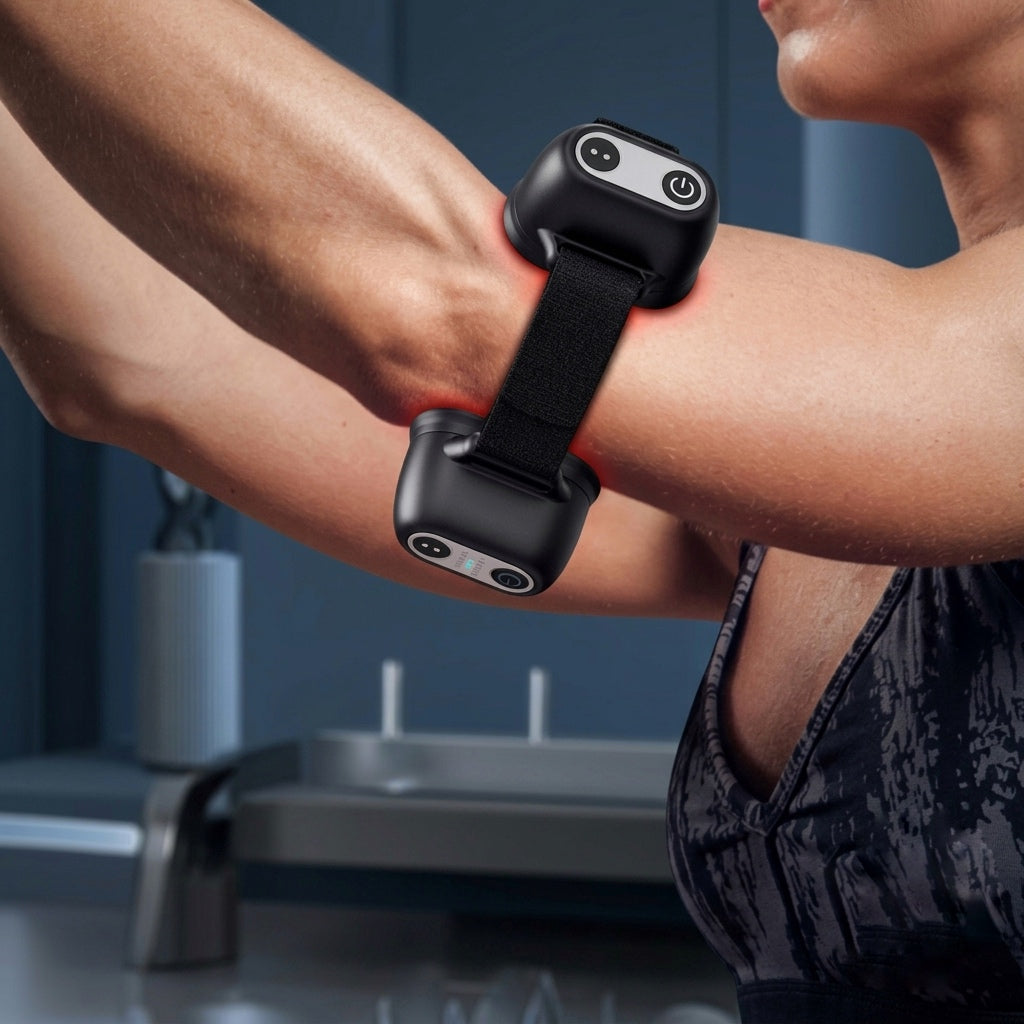
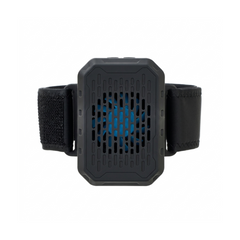
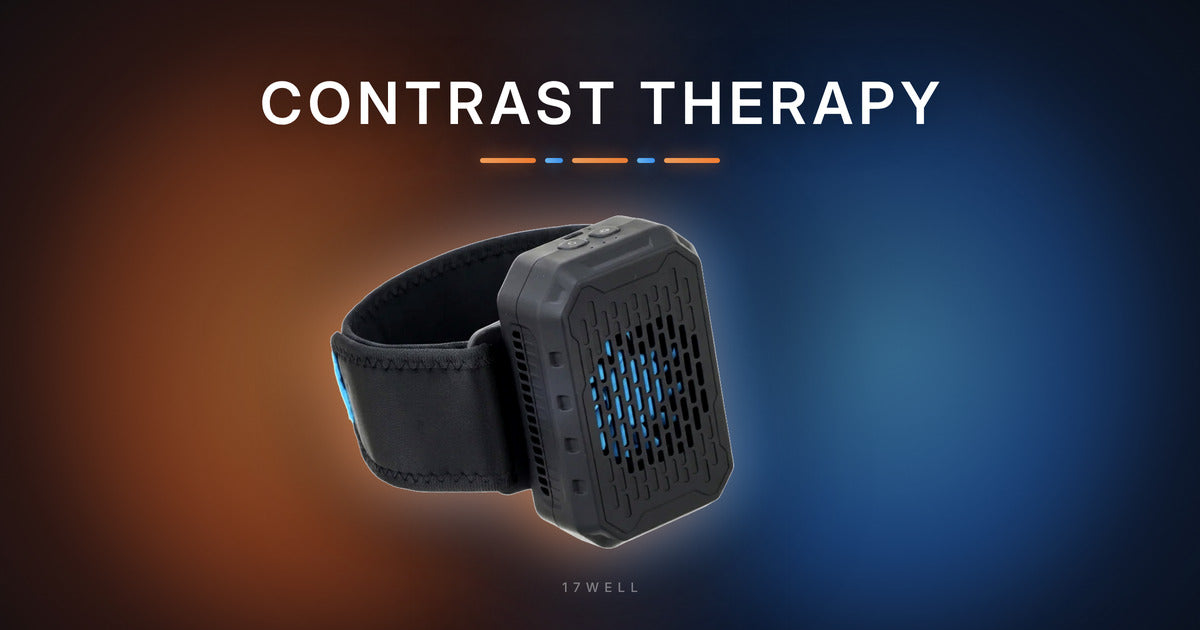
That friction is why a growing number of devices in this category now run a built-in alternating hot and cold cycle. Instead of managing two separate sources, you set the device once and it moves between warm and cool on its own schedule, holding each temperature steady rather than letting it fade. In practice that means no freezer, no microwave, no mid-session swap, and no guessing at how warm the pack still is — the alternation happens inside a single unit that stays strapped where you put it. It is a small design change, but it removes most of the reasons people quit a routine, which is usually what decides whether the thing is still in use two months later. A hot and cold therapy pad built this way is the simplest version of the idea: one unit, one cycle, wearable while you sit.
Whichever route you take, the setup matters less than picking one and repeating it. If you are comparing options, look across the range of hot and cold therapy formats and choose based on the area you actually care about — feet and calves ask for something different than a shoulder or a lower back.
Frequently asked questions
How long should a contrast session be?
Most home sessions run fifteen to twenty-five minutes — usually three to five rounds of a few minutes warm and about a minute cool. Shorter is fine, especially when you are starting. Longer is not automatically better.
Should I finish on hot or cold?
Either. Finishing warm tends to leave people feeling calmer, which suits an evening session. Finishing cool tends to leave people feeling more alert. There is no rule, so pick the one that matches when you plan to do it.
How often can I do it?
Most people who use it regularly land between two and five times a week, often attached to training days or evenings. Some do it daily. If you are looking forward to it, the frequency is probably right; if you are talking yourself into it, do it less often.
Do I need an ice bath for the cold part?
No. The cool phase just needs to be clearly cooler than the warm phase and cool enough to notice. Cool tap water, a gel pack, or a device's cooling setting all work. An ice bath is one way to do the cold half, not a requirement.
Can I do contrast therapy before a workout?
People do, usually on a stiff area before stretching, but it is not a warm-up and should not replace one. Keep it short if you go this route, and do your normal movement-based warm-up afterwards. Most people find it fits more naturally after training or in the evening.
Contrast therapy is not complicated. Warm, cool, repeat, a few times a week, on the part of you that spent the day working. Start with the simplest setup you have, keep the temperatures comfortable, and pay more attention to whether you are still doing it in a month than to the exact minutes in each round.
This is general information, not medical advice.

Leave a comment
This site is protected by hCaptcha and the hCaptcha Privacy Policy and Terms of Service apply.