




Most people asking "do massage guns work" are not really asking a scientific question. They are standing in front of a product page, looking at a price, and asking: is this worth my money, or will it end up in a drawer?
That deserves a fair answer rather than a sales pitch. So this article skips the biology and sticks to the practical side — what the device physically does, who tends to keep using one, and who honestly should not bother. There is a full section on that last one, because it is the part most buying guides leave out.
What a massage gun actually does
Mechanically, a massage gun is simple: a small motor driving an arm back and forth, with a swappable head on the end. You hold it against a muscle and it taps that spot rapidly — usually 1,800 to 3,200 times a minute, depending on the speed setting. The arm travels a short distance each stroke, typically 6mm to 14mm.
That is the whole mechanism: a handheld tool for applying repeated, targeted pressure to one area, on demand, without needing a partner, a floor, or any particular flexibility.
What people report is fairly consistent — the area feels looser afterwards, the sensation is noticeable and a bit buzzy, and a minute or two on one spot is usually enough before it starts to feel like too much. Whether those short-term sensations add up to anything measurable over weeks is a question where research in this area is still developing, and anyone telling you it is settled is selling something.
For a buying decision, the useful framing is: you are buying convenience and targeting, not magic. It gets pressure onto a specific spot in sixty seconds, from a sofa, fully clothed. If that convenience is worth the price to you, it is a reasonable purchase. If it is not, no spec sheet will change that.
What people typically use one for
A few uses come up repeatedly.
After training. The most common by far. Legs after squats or a long run, shoulders after pressing, calves after anything — usually five or ten minutes on the two or three areas that feel worked.
Before training, in short bursts. Twenty or thirty seconds over the areas about to be used, not a full session — and it does not replace actually warming up.
Desk and standing days. Office workers commonly use one on the upper back and shoulders at the end of the day; people on their feet all day tend to use it on calves and feet. Neither group is training for anything — they just want something to do about the part of them that feels stiff.
Travel and gym bags. Compact models exist mainly for this. A foam roller does not fit in a carry-on; a small percussion device does.
As a routine, honestly. Plenty of people use one because it is a pleasant ten minutes with a podcast on. That is a real reason, not a lesser one — a tool you enjoy using is a tool you keep using.
The practical mechanics of each are covered in how to use a massage gun.
Who tends to get the most out of one
Some patterns are clear enough to name.
People who train regularly and hard on their legs. Consistent leg volume — running, cycling, squats — is the strongest predictor of someone still using their device a year later. There is always something that feels worked, so the tool always has a job.
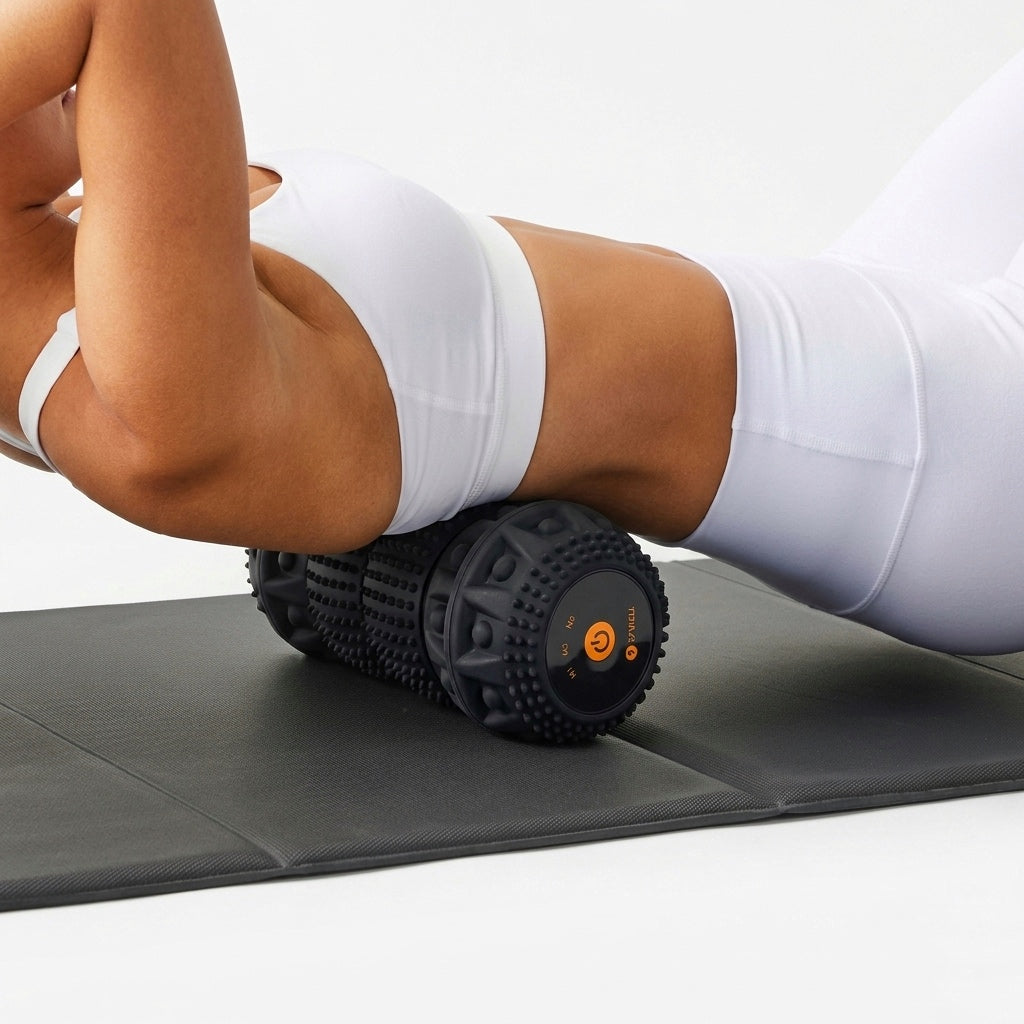
People who dislike floor work, or cannot easily do it. Foam rolling asks you to get down on the floor and hold your bodyweight on your arms. Plenty of people find that awkward, uncomfortable on the wrists or knees, or simply not happening in a small apartment. A handheld device removes that barrier entirely, and that is often the deciding factor.
People whose issue is one or two specific spots. Always the same calf, the same spot between the shoulder blades, the same forearm — a targeted tool suits that far better than anything built to cover a whole limb.
People who travel or train away from home. A device that lives in a bag gets used in hotel rooms and locker rooms where nothing else is available.
People who will genuinely use it. This sounds like a joke but it is the real variable. If you have a history of buying equipment that goes unused, that is better evidence than any product review.
Who probably does not need one
Here is the part most guides skip.
If you train lightly or occasionally, you probably will not notice much. Someone who walks, does a yoga class a week, or lifts twice a month is unlikely to feel a meaningful difference. There is not much for it to do.
It does not make you more flexible. Whatever looseness people report right after a session is short-lived. Lasting range of motion comes from regularly moving through that range — stretching, mobility work, actually using the positions. Buying a device instead of stretching is a straight downgrade.
It is not a substitute for sleep, food, or sensible training load. If you feel beaten up all the time, the device is the smallest available lever by a wide margin. No gadget changes that arithmetic.
It is slow over large areas. You are working a few square inches at a time, so covering both quads, both hamstrings and a full back takes a while. A foam roller does broad coverage far more efficiently. If your interest is general full-body work rather than specific spots, the handheld tool is the wrong shape for the job.
There are places you should not put it. Bony areas, joints, the front of the neck, the spine itself, the head, and anywhere that is painful rather than just tight. If something hurts in a way that is new, sharp, or not going away, that is a conversation with a qualified professional, not something to point a device at.
If you already own and use a foam roller, the overlap is real. Adding a second tool that does a similar job is a common way to end up with two half-used things instead of one well-used one.
Noise is a genuine constraint in some homes. Quiet models are quieter, not silent. In a small apartment with someone sleeping next door, this matters more than people expect.
If you want relaxation, this is the wrong category. A percussion device is stimulating and mechanical. People looking to wind down generally prefer heat, a bath, or an actual massage, and are often disappointed by how un-relaxing a vibrating tool feels.
Most abandoned devices were not bad products. They were bought without a specific job to do. If you cannot name the spot you would use it on this week, that is a real signal.
Massage gun vs foam roller vs stretching — picking by situation
These three get compared as if one has to win. They do not do the same job, so the question is which suits your situation.
One specific spot, sixty seconds, no floor required — the handheld device. Nothing else does this as conveniently.
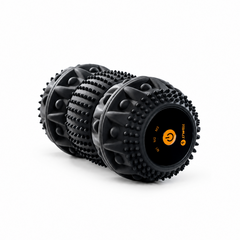
Broad coverage of large muscle groups, cheaply, with nothing to charge — a foam roller. It costs a fraction as much, has no battery and nothing to break, and for whole-legs work it is faster. We compare the two head to head in foam roller vs massage gun.
Feeling generally stiff, or wanting more range of motion — stretching and movement, and no purchase at all. Neither device does this job.
Travelling, or short on space — a compact unit, since a roller is not going in a suitcase. This is the main honest case for a mini massage gun over a full-size one.
Budget of zero — stretching, plus a tennis ball against a wall for specific spots. Less pleasant, but it covers a surprising amount of what a device is bought for.
Can't comfortably get down on the floor — the handheld device. This is where it wins by the widest margin.
Serious training volume — many people end up with a roller for legs and a handheld unit for specific spots. Reasonable, but that is a second purchase, not a first one.
What to look for if you decide to buy one
If you have decided it is worth it, most of the spec sheet is noise. A few things matter.
Stroke depth, more than speed. How far the head travels each stroke — often listed as amplitude — does more to determine how the device feels than the headline percussions-per-minute figure. Full-size units usually sit around 10–14mm; compact units around 6–9mm, which is part of why they feel gentler.
Whether it bogs down under pressure. Some listings quote a stall force figure, and those numbers are inflated often enough to be unreliable. What matters is that the motor keeps its rhythm when you lean your weight in.
Weight, more than most people expect. Anything much over a kilogram gets tiring to hold at arm's length behind your own shoulder. If you will use it on your own back, weight beats any feature.
Battery and charging. USB-C is worth insisting on — a proprietary charger is a real annoyance a year in. Most people charge every couple of weeks, so the connector matters more than the battery claim.
Attachments: ignore the count. Most people use two — a round head for large muscles and a flat one for everything else. Ten heads is a marketing number, not a feature. Same goes for twenty speed settings; three to five is plenty.
Size, matched to what you'll actually do. Compact units win on portability and one-handed reach. Full-size units win on stroke depth and large leg muscles.
Warranty and support over specifications. These are motors with moving parts. Who answers the email in month eight matters more than a decimal place.
Price sanity. There is a real difference between the cheapest units and the mid-range, and much less between mid-range and the top of the market. Diminishing returns arrive early in this category.
Frequently asked questions
Do massage guns actually work, or is it just placebo?
They reliably do what they mechanically claim: apply rapid, targeted pressure to a spot. Most users report the area feels looser afterwards, and that is a real experience. Whether it produces measurable long-term differences is a question where research in this area is still developing. Buy one for the convenience, not for a promised outcome.
How much should I spend?
Most people are well served in the middle of the market. The cheapest units tend to be underpowered and noisy; above the mid-range you are mostly paying for finish and features you will not use. If you are unsure you will stick with it, start at the lower-middle end.
Should I get a compact one or a full-size one?
Compact if it will live in a bag or be used one-handed on yourself. Full-size if you do high leg volume and want more stroke depth. If you cannot decide, the compact one tends to get used more, because it is easier to reach for.
How often can I use one?
Most regular users land between a few times a week and daily, in short sessions of a minute or two per area. There is no benefit to grinding away at one spot for ten minutes — that tends to leave the area feeling tender instead.
I already have a foam roller. Is a massage gun worth adding?
Only if you can name something the roller does not do for you — usually a spot you cannot reach, or the fact that you have stopped getting on the floor. With no specific gap, adding a second tool most often means using both less.
This is general information, not medical advice.


Leave a comment
This site is protected by hCaptcha and the hCaptcha Privacy Policy and Terms of Service apply.