

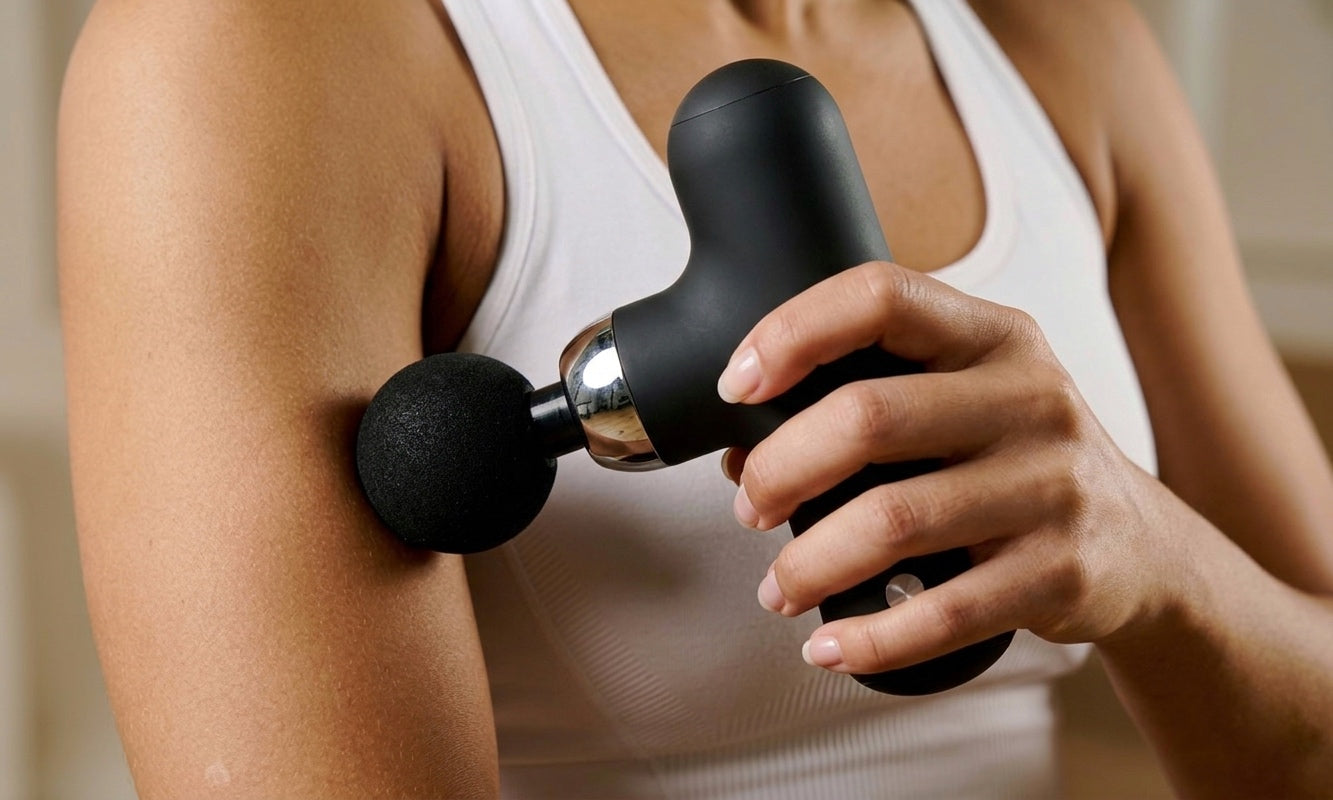
If you're deciding between a foam roller and a massage gun, here's the short answer: both are myofascial release tools that help tight, tired muscles feel looser, but they do it differently. A foam roller uses your body weight to apply broad pressure across large muscle groups, while a massage gun delivers fast, targeted percussion to a specific spot. Neither is strictly better. For many people the two actually work best side by side.
This guide breaks down how each tool works, where each one shines, and how to decide which to reach for (or whether to keep both in your recovery kit).
Foam roller vs massage gun at a glance
| Foam roller | Massage gun | |
|---|---|---|
| How it works | Body weight over a rolling surface | Rapid percussion from a motor |
| Best for | Large areas (back, quads, IT band, glutes) | Targeted spots and knots |
| Pressure control | You control it with body position | You control it with speed and pressure |
| Portability | Bulkier, harder to pack | Compact, travel friendly |
| Effort | More active, uses your own movement | More passive, the device does the work |
| Learning curve | Takes some practice to position | Easy to point and glide |
| Typical price | Low to mid | Low to mid |
Both belong to the same family of self-myofascial release, which simply means easing tension in muscle and the connective tissue around it using pressure you apply yourself.
What a foam roller does
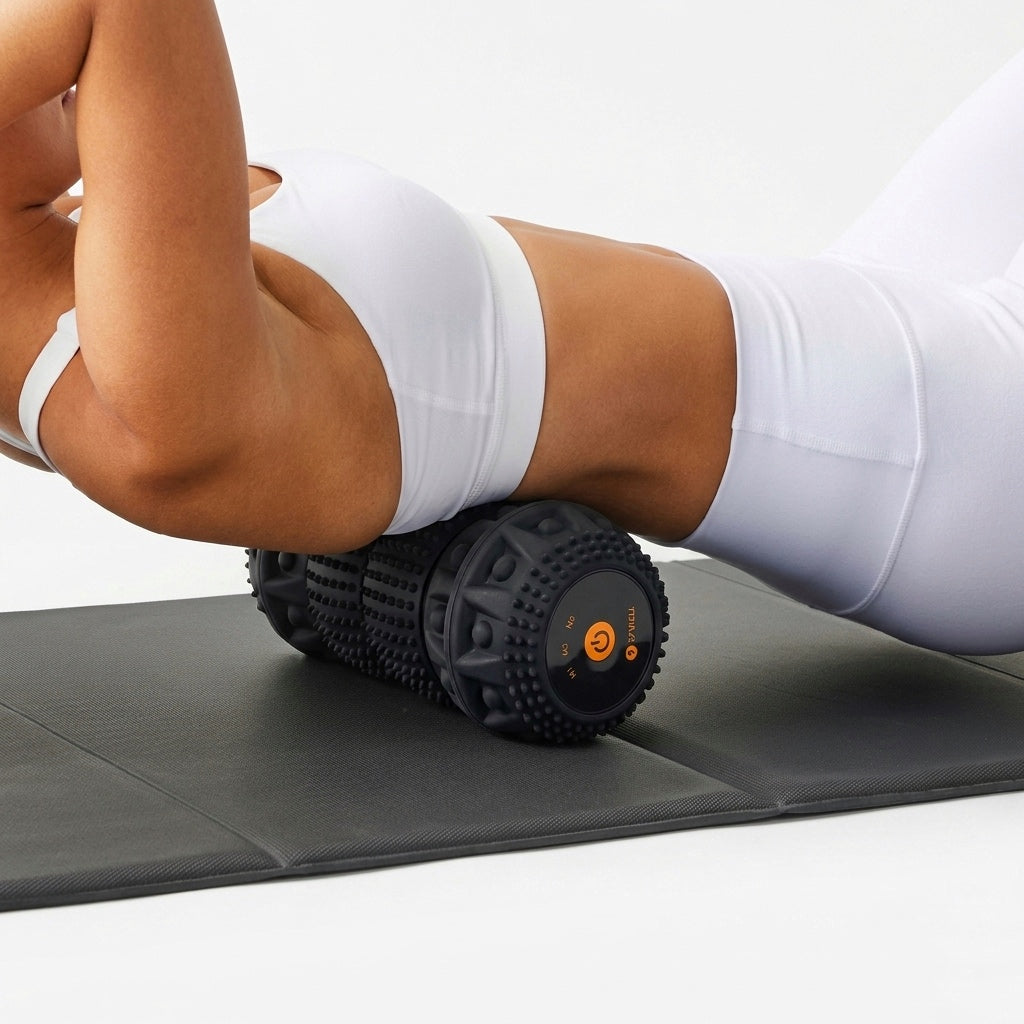
A foam roller is a firm cylinder you lie or lean on, using your own body weight to press into a muscle as you roll slowly back and forth. Because it covers a wide surface, it's excellent for big areas like the upper back, quads, hamstrings, glutes, and the sides of the legs. Rolling for a minute or two per area can help large muscle groups feel more relaxed and mobile before or after exercise.
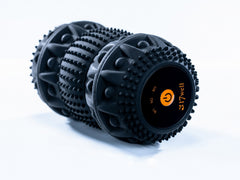
Some foam rollers add vibration, which lets you get a similar loosening effect with less pressure. The 17Well RECOVERO ROLL is a vibrating foam roller built for exactly this, combining a rolling surface with adjustable vibration so you can cover broad areas comfortably. You can see it here: 17Well RECOVERO ROLL Vibrating Foam Roller.
The trade-off is size and effort. A foam roller is bulkier to store and pack, and using one is more of an active movement since you're shifting your body over it.
What a massage gun does
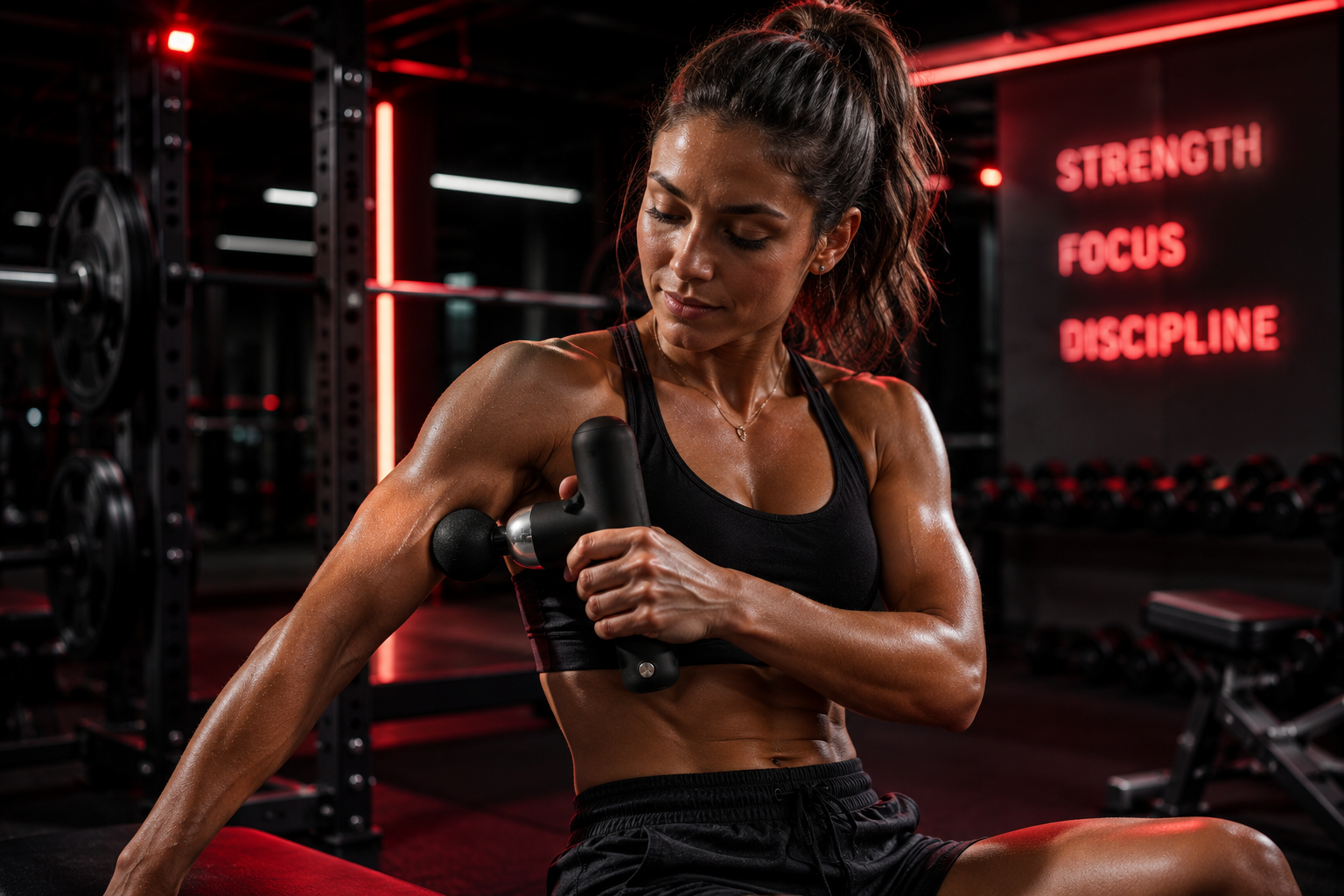
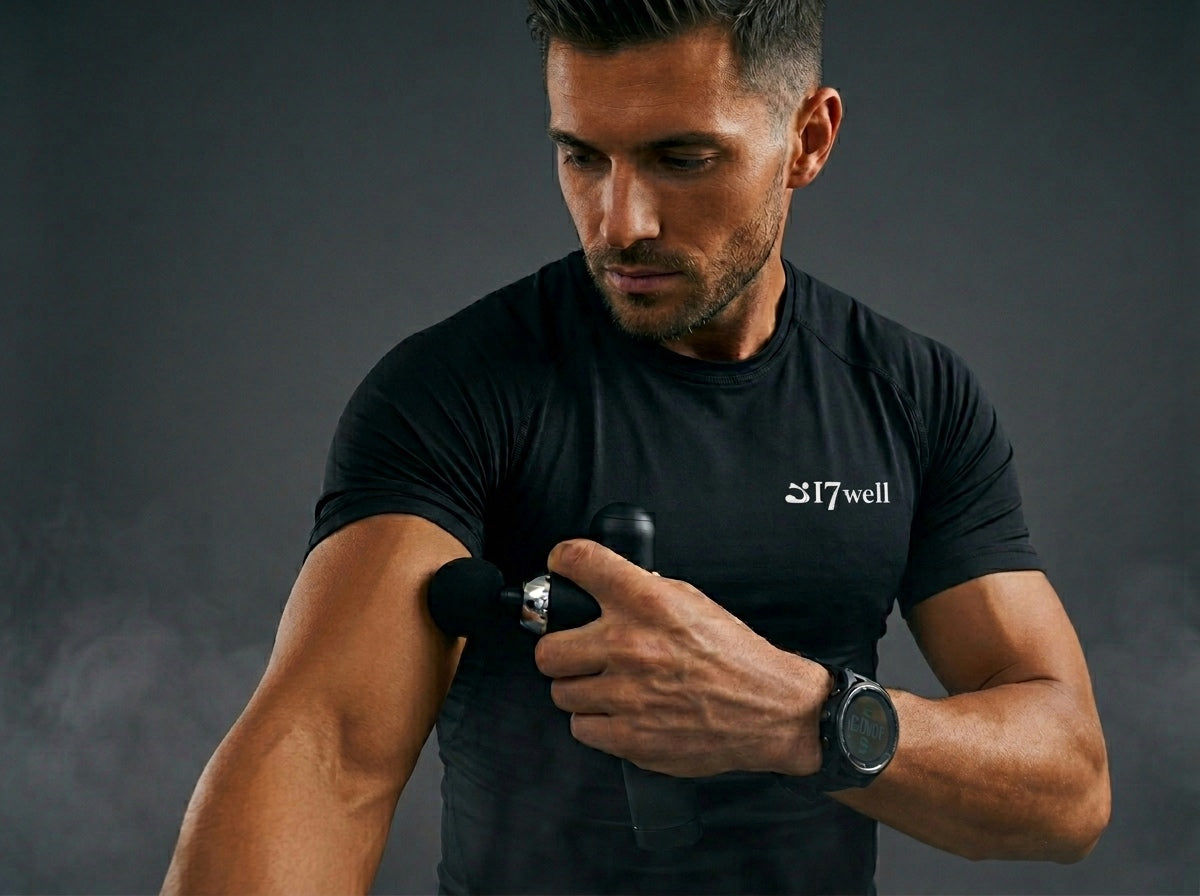
A massage gun (also called a percussion massager) uses a small motor to tap rapidly into a muscle through an attachment head. Instead of pressing your whole body onto a surface, you point the device at a specific muscle and let it do the work. That makes it fast, precise, and great for zeroing in on a particular tight spot, a stubborn knot, or a hard-to-reach area like the calves, forearms, or shoulders.
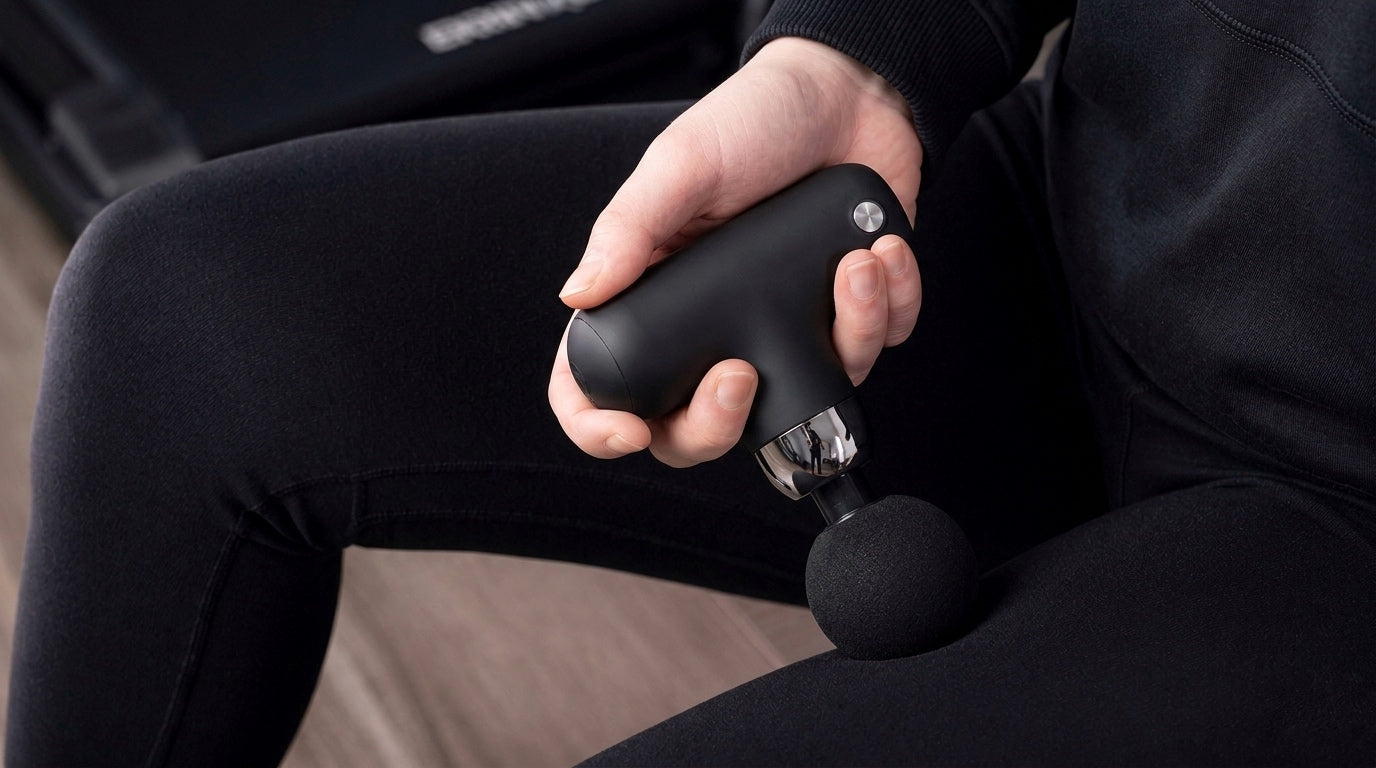
A massage gun is also far easier to travel with. A compact model like the 17Well Mini Massage Gun fits in a bag or drawer and works in seconds, which makes it easier to stay consistent. If you're new to one, our full guide on how to use a massage gun walks through technique, timing, and safety.
The trade-off is coverage. Because the contact area is small, a massage gun takes longer to cover a big muscle group than a single pass with a foam roller.
When to use a foam roller
A foam roller tends to be the better pick when you want to:
- Cover large muscle groups quickly, like the back, quads, or glutes.
- Work through a general warm-up before a bigger training session.
- Apply broad, sustained pressure using your body weight.
- Combine mobility work with a bit of active movement.
When to use a massage gun
A massage gun is usually the better pick when you want to:
- Target a specific spot, knot, or tight area with precision.
- Reach smaller or awkward muscles like the calves, forearms, or shoulders.
- Do a quick session at your desk, at the gym, or while traveling.
- Keep the work passive and let the device do the effort.
Do you need both?
You don't have to choose one forever. A lot of people use a foam roller and a massage gun together because they complement each other. A common approach is to start with a foam roller to loosen up large areas broadly, then switch to a massage gun to focus on the specific spots that still feel tight. Using both, foam roller first and massage gun second, gives you wide coverage plus pinpoint attention in one routine.
If you only want to start with one, think about your main need. If most of your tension sits in big areas like the back and legs and you like active mobility work, a foam roller is a natural first tool. If you want something fast, portable, and precise for targeted spots, a massage gun is the easier entry point.
A quick note on expectations
Both foam rollers and massage guns are comfort and recovery tools for healthy muscle. They can help tight muscles feel looser and support a consistent recovery routine, but they aren't treatments for injuries or medical conditions. If you have a recent injury, ongoing pain, or a health condition, check with a healthcare professional before using either one, and stop if anything feels sharp rather than comfortable.
The bottom line
In the foam roller vs massage gun debate, the honest answer is that they solve slightly different problems. A foam roller gives you broad, body-weight pressure over large areas, and a massage gun gives you fast, targeted percussion wherever you need it. Choose the one that fits your body and routine, or use both for the most complete recovery kit.
Ready to build your setup? Explore the 17Well Mini Massage Gun for targeted percussion and the 17Well RECOVERO ROLL Vibrating Foam Roller for broad myofascial release. And if you go the massage gun route, learn the right technique in our guide on how to use a massage gun.

Leave a comment
This site is protected by hCaptcha and the hCaptcha Privacy Policy and Terms of Service apply.